COVERAGE INTELLIGENCE
Know exactly what you're placing.
Coverage Intelligence reads the policy: the forms, the endorsements, and the manuscript wording. It identifies the gaps, where terms moved, and what that means for the insured. Powered by DeX ai.
Trusted by industry leaders








THE PROBLEM
The gap shows up at claim time.
Coverage differences are found by reading. Nobody has time to read two policies end to end, so the difference that matters is the one nobody caught.
Limits and Premium don't tell the whole coverage story
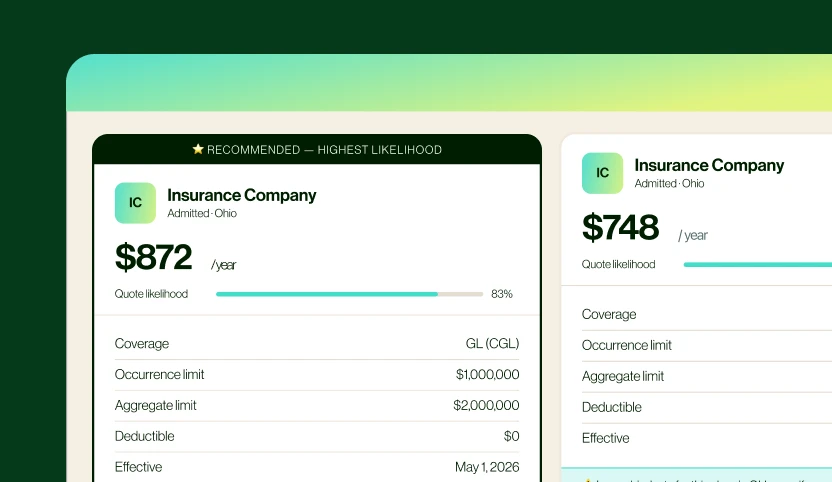
Two quotes at the same limit can sit far apart once you read the exclusions and endorsements. Coverage Intelligence scores what each form actually covers and whether it fits the exposures the business carries, so a broader form competes on merit instead of losing to a lower number.

Language drifts at renewal
An endorsement added, a definition narrowed. The premium might look flat, but the coverage is not.

Towers are assembled by hand
Excess structures get tracked in a spreadsheet and checked by eye, layer by layer, every time one of them moves.

HOW IT WORKS
More than a model reading a PDF.
A structured map of how commercial coverage is written. DeX ai reads against it, rather than inferring meaning from the text in front of it.
It reads the document set.
Policy form, endorsement schedule, manuscript endorsements, and schedules are read together as one policy, not as separate files.
It works from the wording
Findings grounded with source citations point back to the wording they came from, so a coverage professional can check them instead of trusting them.

It knows what impacts what
Exclusions, sublimits, definitions, conditions, and attachment points are held in relation to each other, so a change in one surfaces wherever it has an effect.

It works the way a coverage analyst works
The DeX Coverage Analyst reads a policy in the order a coverage professional reads it: what is granted, what is excluded, what is capped, and what is conditioned.

WHAT IT DOES
One map. Every question about the policy.
Coverage differences are found by reading. Nobody has time to read two policies end to end, so the difference that matters is the one nobody caught.
Compare coverage
Clause by clause, across carriers and across renewals. Differences are shown in the same language every time, not summarized differently on each read.
Identify gaps
What the program does not cover, surfaced before binding rather than after a loss. Exclusions, sublimits and definitions that do not line up.
Build the proposal
The client-facing proposal generated from the comparison, so the document a broker presents matches the coverage actually placed.
Map the tower
Attachment points, layer limits and the space between them, laid out so a gap in the structure is visible rather than inferred.
WHERE IT MATTERS THE MOST
Surplus lines is where the wording is the product.
Admitted forms are filed and comparable. Non-admitted forms are manuscript, and two quotes for the same risk can offer materially different coverage. That is where reading everything is least practical and most consequential. Coverage Intelligence works across both. It earns its keep in E & S and specialty.
WHO WE SERVE
Anyone who has to defend the placement.


PROFESSIONAL JUDGMENT
The read is ours. The call is yours.
Coverage Intelligence does not issue a coverage opinion and does not decide whether a claim is covered. It gives a coverage professional the wording, the comparison, and the reference, so that they can make the call.
FAQ
Questions we get asked.
Yes. Manuscript wording is the case it was built for. On non-admitted business there is no filed form to compare against, so the language has to be read as written: the insuring agreement, the endorsements attached to it, and anything typed onto the policy by the carrier or the wholesaler. Coverage Intelligence reads manuscript language the same way it reads a standard form, without needing a match in a form library to do it.
Send us two policies. We'll show you the difference.
OTHER SOLUTIONS